Turboprop vs jet for a short trip
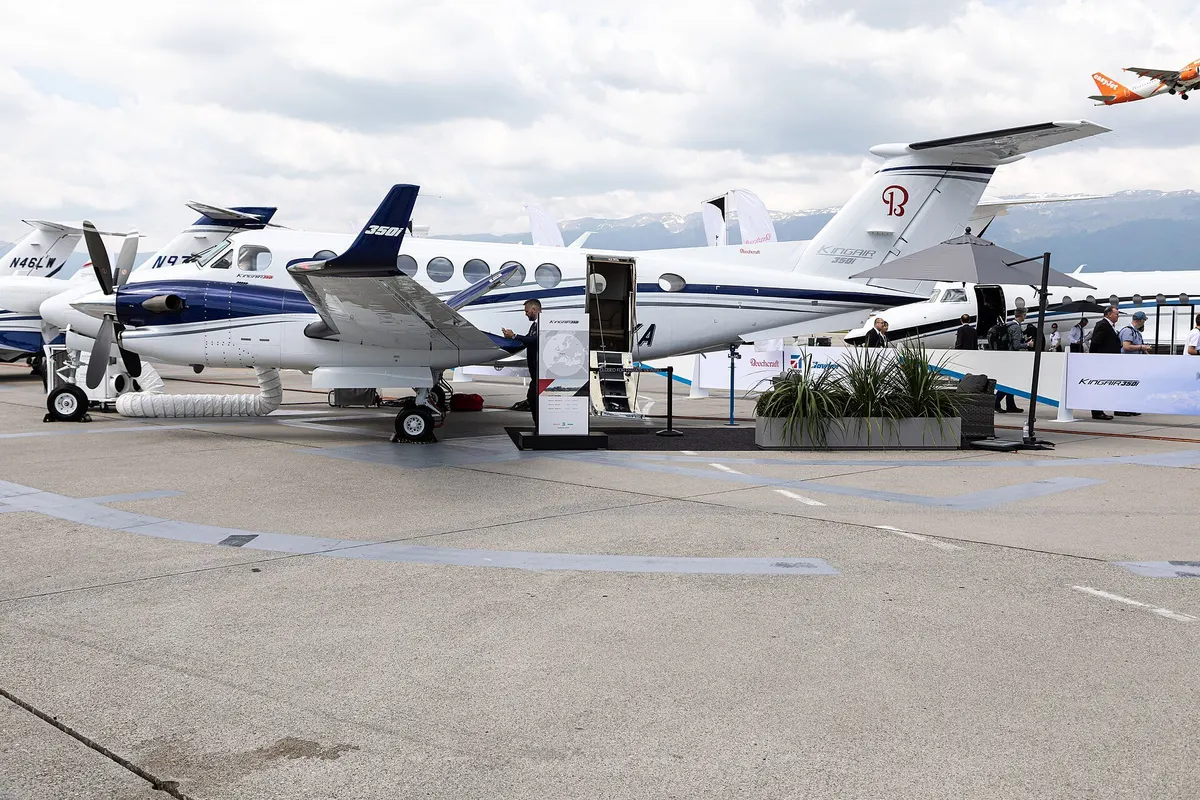
In a turboprop vs jet comparison on a short trip of 400 to 600 km, the two usually land within 10 to 20 minutes of each other, so the choice tends to come down to runway, cabin and price rather than speed. That's our arithmetic from the manufacturers' published figures, and it ignores wind, climb, descent and taxi time.
Here are the figures we used, from the makers' own pages: the Beechcraft King Air 360 as the turboprop, and the Pilatus PC-24 as a light jet.
| King Air 360 (turboprop) | PC-24 (jet) | |
|---|---|---|
| Maximum cruise speed | 312 knots | 440 knots |
| Maximum range | 1,806 nm | 2,000 nm |
| Take-off distance | 3,300 ft (field length) | 3,090 ft |
| Seats | Up to 11 occupants | 6, 8 or 10 seat layouts |
What the speed gap means on a short route
A knot is 1.852 km/h, so 312 knots is about 578 km/h and 440 knots about 815 km/h. At those top cruise speeds:
- 400 km: about 42 minutes in the King Air and 29 in the PC-24, roughly a 12-minute gap.
- 600 km: about 62 minutes in the King Air and 44 in the PC-24, roughly an 18-minute gap.
Real trips take longer than that for both, because neither aircraft cruises for the whole flight, and the gap tends to shrink on short routes where much of the time is spent climbing and descending. Compare that with a drive to the airport and back at each end, and a quarter of an hour is rarely what decides it.
What does decide it
Runway and airport. Both makers publish take-off figures a little over 3,000 ft, though each measures it in its own way, so the numbers alone don't tell you which strip suits which aircraft. Pilatus says the PC-24 can operate on short and unmade runways, including grass, gravel, earth and snow, which is unusual for a jet. Being able to use a strip, though, is not the same as being approved to use it for a charter. We check with the operator and the airport, which is part of what we do after you send a request.
Passengers and cabin. A turboprop with up to 11 seats and a jet with six or eight are different cabins. If you have a bigger group, how many passengers a private jet can carry shows how much seat counts vary.
Range. Both of these cover a short trip with room to spare. Range only starts to separate turboprops from jets on longer routes, and our article on choosing a jet by passengers and range explains how to read the figures.
Price. It depends on the aircraft, the airports and the day. We don't put numbers on it here; see how charter pricing works.
A sensible way to compare
Ask for two quotes for the same trip, one on each type if both are available, and put four things side by side: the departure and arrival airports, the flight time you'd actually plan around, the seats and baggage space, and the price. Then add the transfer time at each end.
The Range Explorer shows which aircraft in our network can reach a destination, the Fleet page lists them, and you can send us your route when you're ready.
Sources
All pages read on 3 October 2026. The minutes above are our own arithmetic from these figures.
- Textron Aviation, Beechcraft King Air 360 page (maximum range 1,806 nm, maximum cruise 312 ktas, up to 11 occupants, takeoff field length 3,300 ft): https://beechcraft.txtav.com/en/king-air-350i/
- Pilatus Aircraft, PC-24 page (3,090 ft take-off distance, 440 KTAS maximum cruise speed, 2,000 nm maximum range, short and unmade runways): https://www.pilatus-aircraft.com/en/fly/pc-24
- Pilatus Aircraft, PC-24 technical data page (6-seat, 8-seat and 10-seat configurations): https://www.pilatus-aircraft.com/en/pc-24/technical-data
Frequently asked questions
Is a turboprop slower than a jet?
Yes, in the air. Textron lists the King Air 360 at a maximum cruise of 312 knots and Pilatus lists the PC-24 jet at 440 knots. On a 400 km trip that is a gap of roughly 12 minutes at cruise speed.
Can a jet use short or unpaved runways?
Some can. Pilatus says the PC-24 can operate from short and unmade runways such as grass, gravel, earth or snow. Whether a specific strip is approved for a charter is a separate question we check with the operator.
Which is cheaper, a turboprop or a jet?
It varies by aircraft, route and day, so we don't quote a rule. Ask for both options in writing and compare them for your trip.
Keep reading
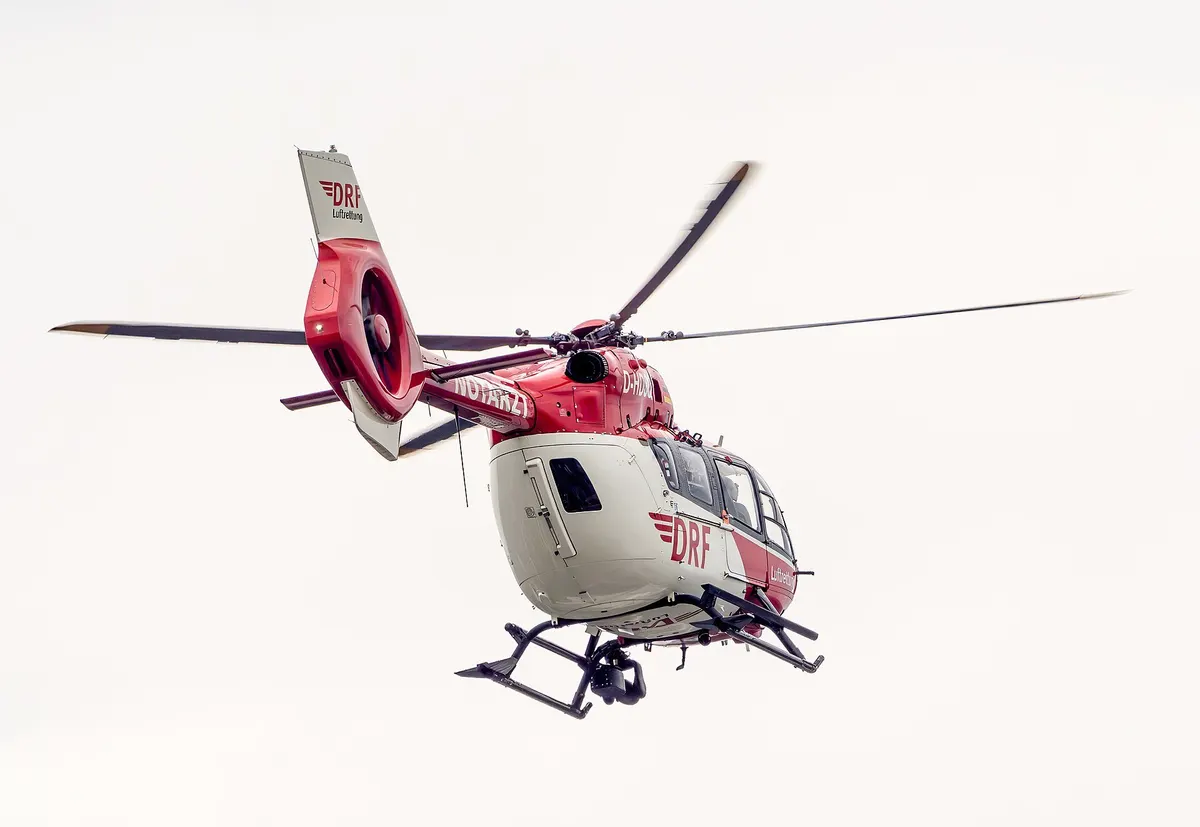
Jet or helicopter: which suits your trip?
How distance, runways, passengers and luggage decide between a charter jet and a helicopter, with published figures for a light jet and a twin helicopter.
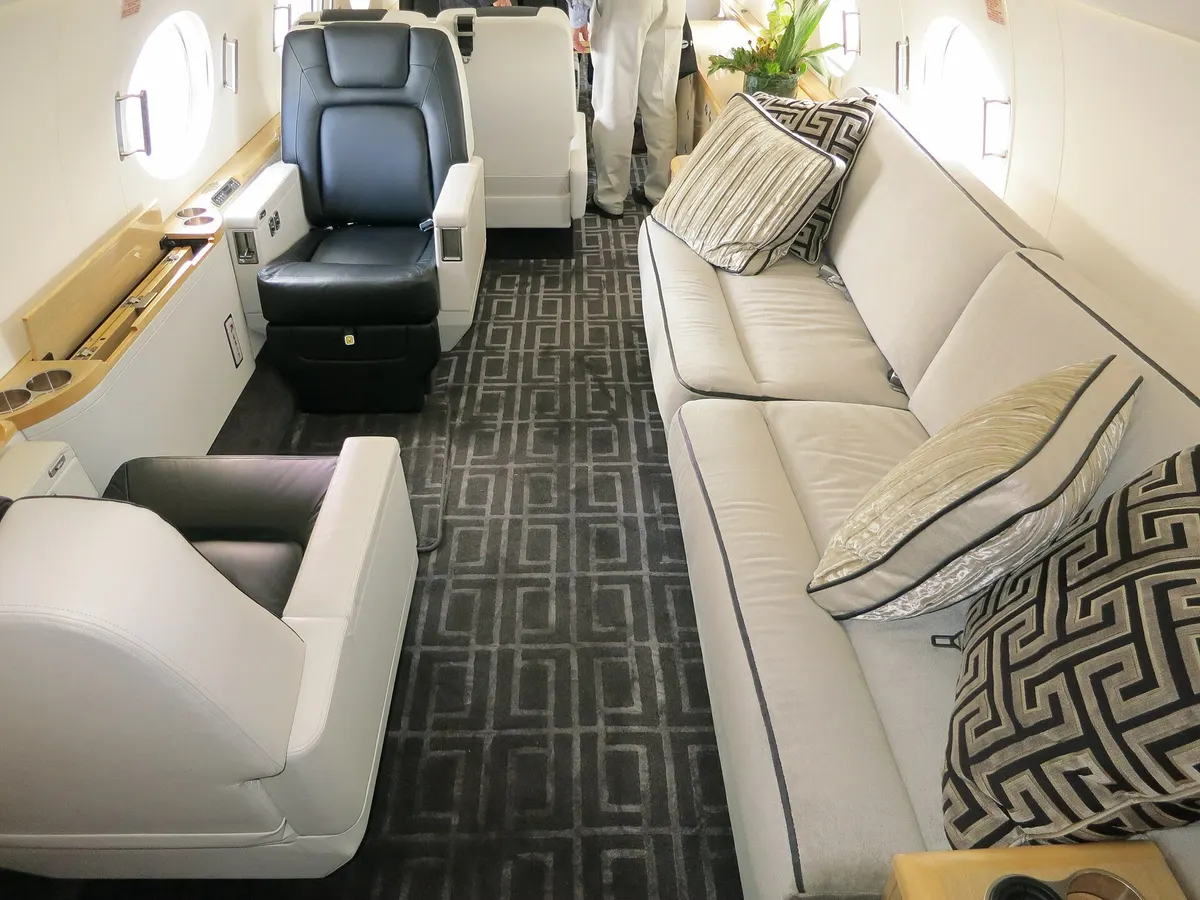
How many passengers can a private jet carry?
How many passengers a private jet carries depends on the model and its cabin layout. Published seat counts for five aircraft, and what to confirm.

Choosing a charter jet by passengers and range
How seats, range and baggage point to a light, midsize or large jet, and why a published maximum range is not what you get with a full cabin.