Choosing a charter jet by passengers and range
Charter jets are usually grouped as light, midsize and large, with super-midsize between. The labels are loose, and nobody agrees on exactly where one ends. What's useful is what they mean for your trip: how many people, how far, and how much you're carrying.
Start with people and bags
Count passengers, then count luggage. Four people with cabin bags and four people with golf clubs and three suitcases each are different trips.
Manufacturers publish a maximum seat count, but it's a ceiling. Charter cabins are often laid out with fewer seats for comfort, and the baggage space may be limited by weight as well as volume. As a guide:
- A light jet tends to suit up to a handful of passengers on a short or medium trip.
- A super-midsize jet moves to a larger group and more distance. Bombardier lists its Challenger 3500 for up to 10 passengers.
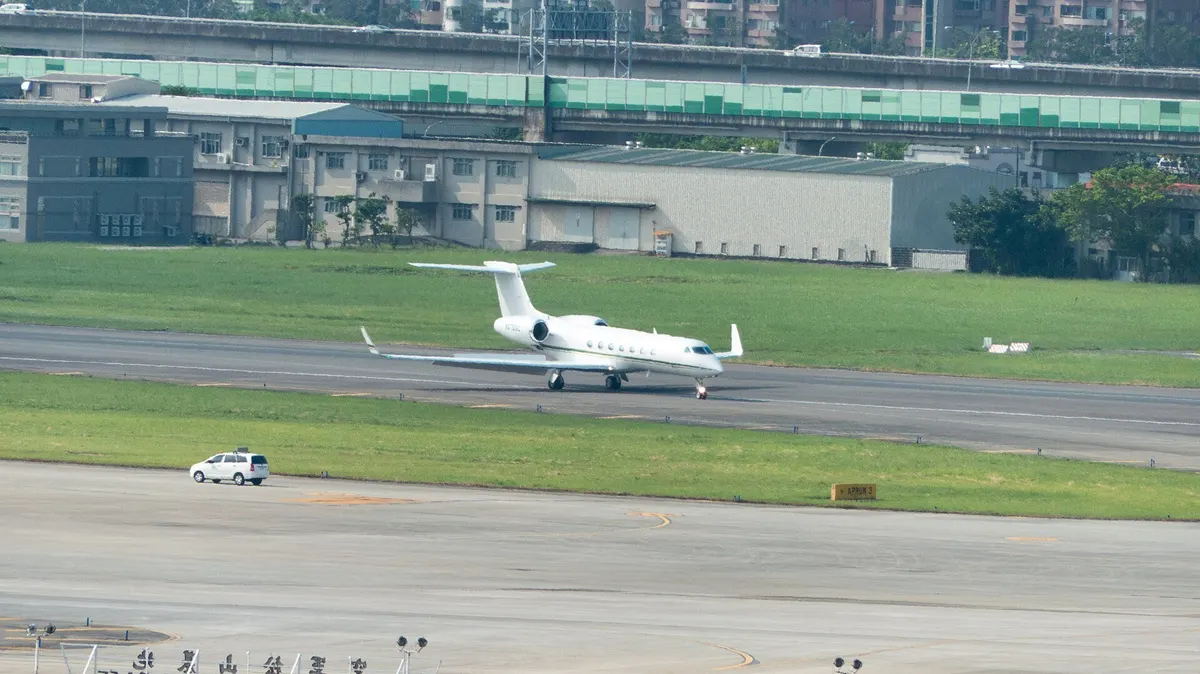
- A large-cabin jet is for longer flights or when space matters. The aircraft in the cover photo is a Gulfstream G550.
Then check range, honestly
Range is where brochures and real trips drift apart.
Embraer lists the Phenom 300EV, a light jet, at 2,055 nautical miles and speeds up to Mach 0.80. Look at the fine print beneath that figure on Embraer's page, though: it is stated for five occupants at 200 lb each, with fuel reserves in line with NBAA IFR rules, under particular wind and temperature assumptions.
Bombardier lists the Challenger 3500 at up to 3,400 nautical miles. Its fine print says that's a theoretical range with NBAA IFR reserves, at Mach 0.77 with four passengers and two crew, and that actual range depends on speed, weather, options and other factors.
Both are honest numbers, and neither is a promise for your flight. Put a full cabin, luggage and a headwind on the trip and the practical range comes down. Our rule of thumb is to treat the published figure as an upper limit and plan the trip comfortably inside it. (This is our advice, not a manufacturer figure.)
The airports matter too
An aircraft that can fly the distance still needs to land. Runway length, altitude, temperature and the airport's own restrictions all play in. Some airports won't take larger types, or limit them at certain hours. So the question isn't only "can it fly there?" but "can it land where I need it to?"
Our Range Explorer is a good place to start. Pick an airport and it shows which aircraft in our network can reach your destination nonstop, or with a fuel stop.
When a fuel stop is fine
A fuel stop isn't a failure. A smaller, cheaper aircraft with one stop can sometimes suit a trip better than a larger one that flies straight through. It adds time, and sometimes a customs or crew-change step, so it's worth weighing against the price difference. The pricing article explains why bigger aircraft cost more for each hour.
What to tell us
When you send a request, the details that help us most are:
- exact number of passengers, including children
- luggage that's unusual (golf clubs, skis, equipment)
- whether a stop is acceptable
- the airports you'd consider at each end
Request a callback with those and we'll come back with aircraft that fit the trip.
Sources
All pages read on 3 October 2026.
- Embraer, "Phenom 300EV" page (range, speed and the conditions stated beneath the range figures): https://www.embraer.com/executive-jets-our-aircraft/phenom-300ev/en/
- Bombardier, "Challenger 3500" page (range, passengers and the conditions stated for range): https://bombardier.com/en/aircraft/challenger-3500
- Wikimedia Commons, photo credit as shown under the cover image.
Frequently asked questions
How far can a light jet fly?
Embraer lists its Phenom 300EV light jet at 2,055 nautical miles, but that figure is for five occupants under set conditions. A full cabin, headwinds and reserves all reduce it.
How many people fit in a super-midsize jet?
Bombardier lists the Challenger 3500 for up to 10 passengers. Charter operators usually configure cabins with fewer seats than the maximum, so confirm the real number for your aircraft.
What affects the range I actually get?
Passenger and luggage weight, wind, speed, weather, airport conditions and fuel reserves all do. Manufacturers state the conditions behind their range figures for this reason.
Keep reading
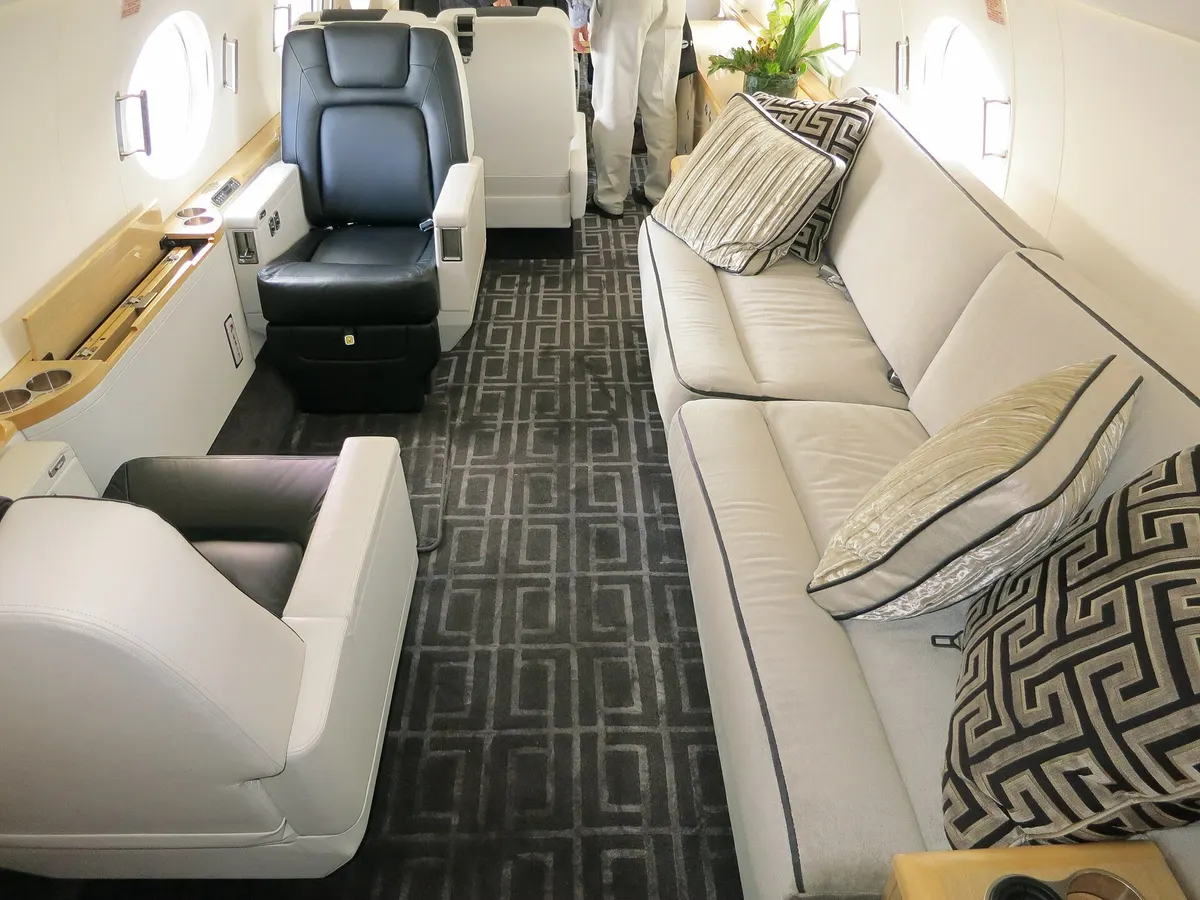
How many passengers can a private jet carry?
How many passengers a private jet carries depends on the model and its cabin layout. Published seat counts for five aircraft, and what to confirm.
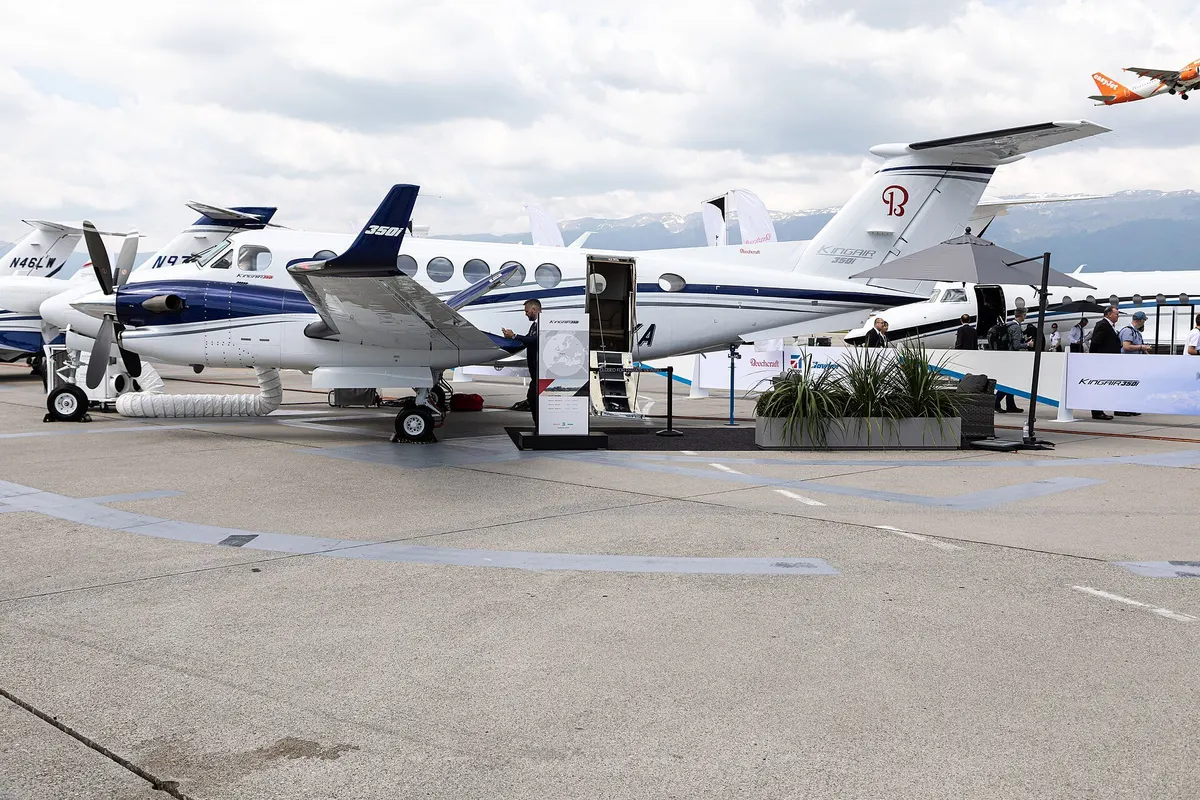
Turboprop vs jet for a short trip
On a trip of 400 to 600 km a turboprop and a jet land minutes apart. The published speed and runway figures for two aircraft, and what decides it.
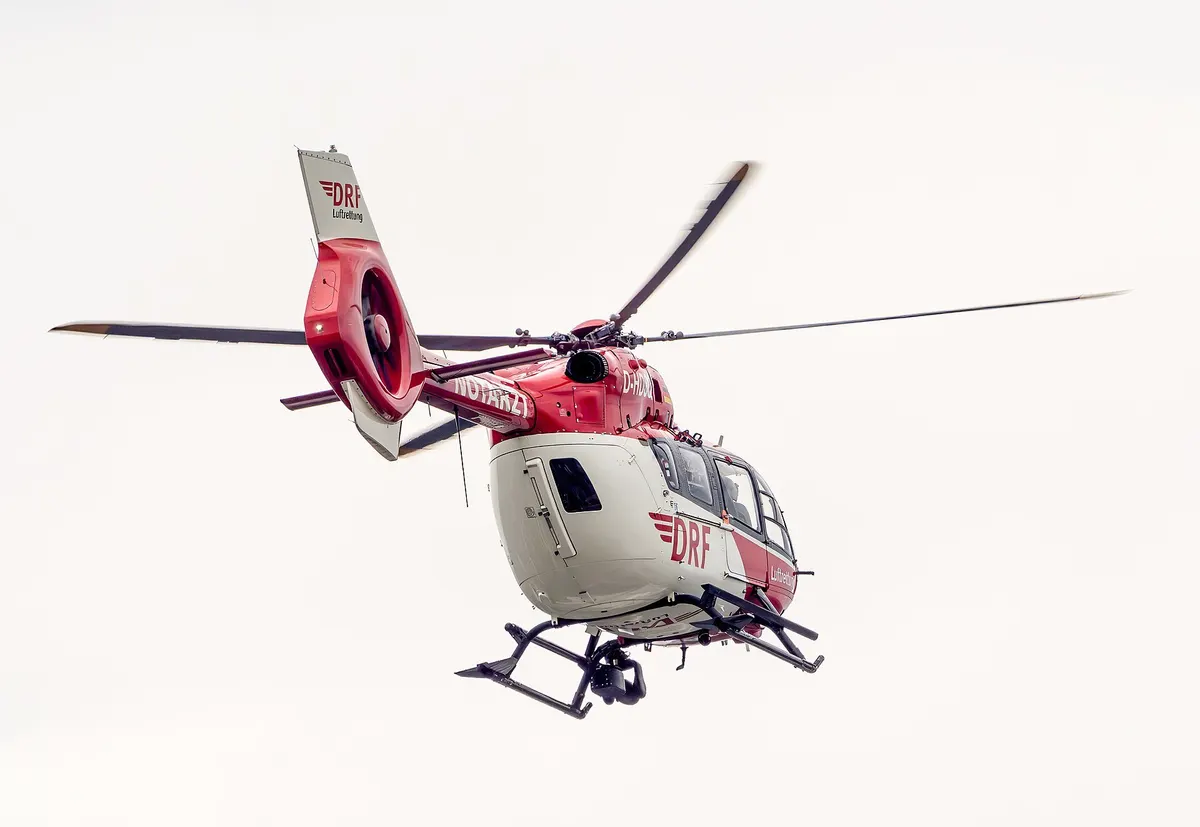
Jet or helicopter: which suits your trip?
How distance, runways, passengers and luggage decide between a charter jet and a helicopter, with published figures for a light jet and a twin helicopter.